%20(2).png)
Why Life Insurance Death Benefits Are Usually Tax-Free
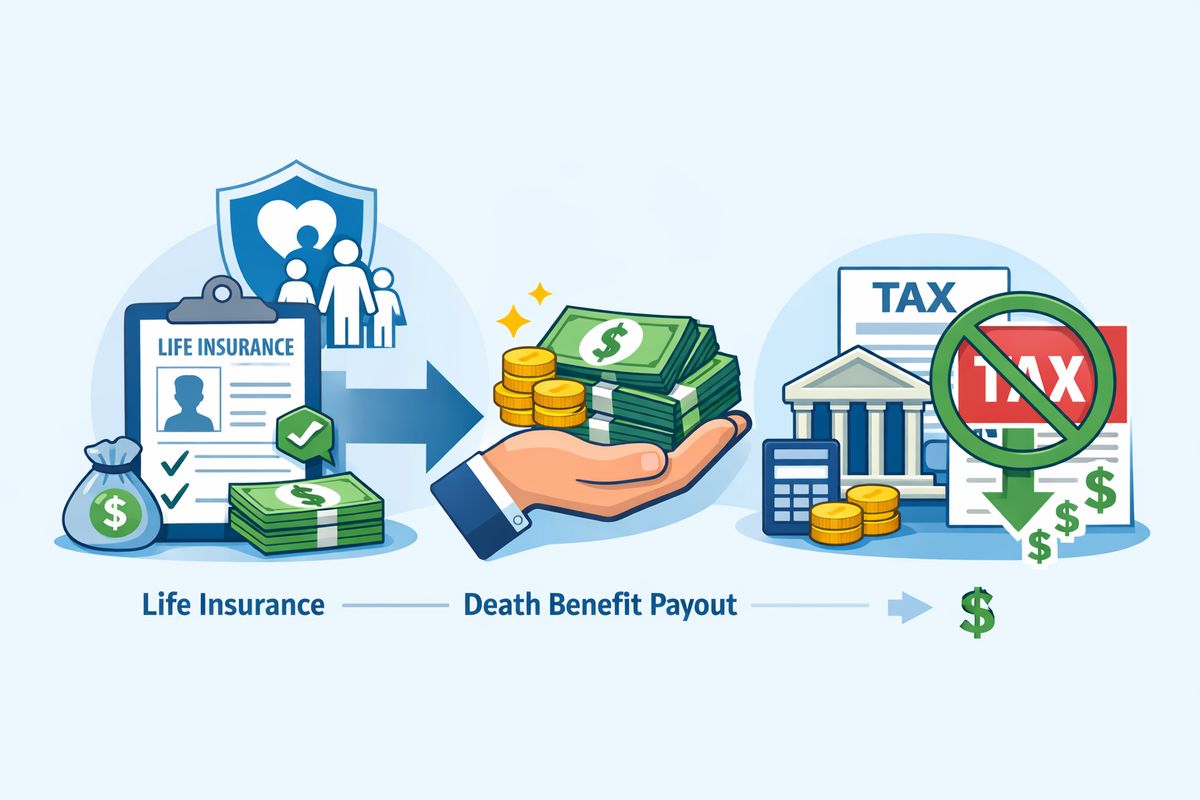
A tax-free death benefit is usually the money your beneficiary gets from your life insurance policy without owing federal income tax on the main payout. That sounds almost too simple, especially when money, death, and taxes are all in the same sentence, but the basic rule really is that straightforward. Here’s what that means, why it works that way, and where the exceptions start to sneak in.
What a tax-free death benefit actually means
A life insurance death benefit is the money paid out after you die to the person, people, or entity named on your policy. If you name your spouse, child, sibling, or anyone else as beneficiary, that’s the person who usually receives the payout.
When people say a death benefit is tax-free, they usually mean income-tax-free. In plain English, your beneficiary typically does not treat that money like wages, freelance income, or a bonus on a tax return. It’s generally a benefit paid because of death, not earned income.
That distinction matters a lot. If your family is counting on that money to cover the mortgage due on the first of the month, keep up with child care, or just stay afloat while life is upside down, losing a chunk of it to income tax would defeat a big part of the point of having coverage in the first place.
Why life insurance death benefits are usually tax-free
The short answer is that tax law usually gives life insurance special treatment. A death benefit is generally viewed as money paid because someone died, not as income someone worked for or investment profit someone earned.
That’s the main answer. For most everyday policies, your beneficiary gets the payout and does not owe federal income tax on the core death benefit.
The basic IRS rule in everyday terms
In everyday terms, if a life insurance company sends your beneficiary the policy payout after your death, that amount usually does not show up as taxable income on a standard federal return. It’s not taxed the way salary, interest, dividends, or retirement withdrawals are taxed.
That’s why life insurance often feels different from almost every other kind of money. Your paycheck gets taxed. Bank interest gets taxed. Traditional IRA withdrawals usually get taxed. A standard life insurance death benefit usually doesn’t.
If you want a broader look at where insurance money is and isn’t taxed, it helps to read more on what counts as taxable life insurance money.
Why the tax code gives life insurance special treatment
The logic is pretty human. Life insurance is meant to replace financial support that disappears when you die. It’s there to help with bills, debt, lost income, funeral costs, and the ugly practical stuff that doesn’t pause just because someone is grieving.
Think of it like a financial airbag. The payout is supposed to soften the impact of a crash, not create a new tax bill on top of the crash.
That special treatment also lines up with how people actually use the money. Most beneficiaries aren’t treating a death benefit like a windfall for luxury spending. More often, it’s used to keep the lights on, cover rent, or buy a little breathing room at the worst possible moment.
How a death benefit usually gets paid
After a death, the beneficiary typically files a claim with the insurance company, sends in a death certificate, and waits for the insurer to review the claim. Once approved, the insurer pays according to the policy terms and the payout option selected.
The key point is simple: who gets the money, and how the money gets paid, can affect what part is tax-free and what part is not.
Lump sum payouts
The most common option is a lump sum payout, meaning the beneficiary gets the full death benefit at once. This is the cleanest example of a tax-free death benefit.
If the policy pays $500,000 in one shot and there’s no unusual twist, that $500,000 is usually not taxable income to the beneficiary. Nice and clean.
This is why lump sums are often the easiest option from a tax standpoint. There’s less room for extra earnings, delays, and accounting confusion. The insurer pays the benefit, the beneficiary receives it, and that’s usually the end of the income-tax story.
Installments or held-on-deposit options
Sometimes the insurer doesn’t pay the entire amount at once. Instead, the money may stay with the insurance company and get paid out in installments, or sit in an account the insurer manages for a while.
Here’s the catch: the original death benefit is still usually income-tax-free, but interest earned after death usually is taxable. So if a $300,000 death benefit stays with the insurer and earns extra money before it reaches the beneficiary, that extra amount can be taxed.
That’s a big distinction. The principal, meaning the original death benefit, usually keeps its tax-free treatment. The growth that happens afterward does not automatically get the same treatment. The same general idea shows up in other insurance topics too, especially when looking at how deferred growth inside a policy works.
When a life insurance death benefit can become taxable
“Usually tax-free” is true, but it doesn’t mean “never taxed under any circumstances.” This is where a lot of confusion starts.
In most cases, the beneficiary won’t owe income tax on the main payout. But some situations can create taxable interest, reduce the usual exclusion, or pull the death benefit into a larger estate tax issue.
If interest builds up before you receive the money
If the insurance company holds the death benefit for a period of time and interest builds up, that interest is generally taxable. The original benefit stays separate from the interest for tax purposes.
Say the death benefit is $250,000, but the insurer delays payment and adds $4,200 in interest. Usually, the $250,000 is not taxable income, but the $4,200 is.
That’s why payout paperwork matters. If part of the payment is labeled “interest,” assume that part deserves a closer look at tax time.
If the policy was transferred for money
There’s a tax rule called the transfer-for-value rule. The name sounds annoying because it is, but the idea is simple enough. If a life insurance policy gets sold or transferred in exchange for money or something else of value, the usual tax-free treatment can be limited.
In that situation, part of the death benefit may become taxable. This tends to come up in business deals, policy sales, or unusual ownership changes, not in the average household policy that’s been sitting in a file cabinet for years.
Still, this is one of those details that can matter a lot if a policy has changed hands. If you’ve been looking into the line between smart planning and using insurance mainly for tax advantages, this is one of the rules that keeps that line from getting too loose.
If the payout becomes part of a taxable estate
A death benefit can be income-tax-free to the beneficiary and still be included in your taxable estate. Those are two different systems.
If the policy is included in your estate, the value of the death benefit may count toward estate tax calculations. That doesn’t mean the beneficiary suddenly owes income tax on the payout. It means the death benefit can affect estate taxes if your estate is large enough and the ownership setup pulls the policy back into it.
For a lot of households, federal estate tax won’t be the issue that changes the outcome. But for larger estates, ownership structure matters more than people expect.
If the policy is employer-provided or group coverage
Employer-provided life insurance and group term coverage can come with extra wrinkles. The life insurance piece may still follow the usual death benefit rule, but workplace death payments aren’t always all one thing.
For example, a payment from an employer after a death might include compensation, unused leave, retirement benefits, or group life proceeds. Those pieces can be taxed differently. The clean, simple “life insurance is tax-free” answer gets messier when benefits are bundled together through work.
Income tax vs. estate tax: the mix-up that trips people up
This is one of the biggest misunderstandings around life insurance. People hear “tax-free” and assume no tax issue exists anywhere. That’s not what the phrase means.
Income tax and estate tax are separate. Completely different rules, different triggers, different forms of planning.
Why “tax-free” Doesn’t always mean “zero tax issues”
When someone says a life insurance payout is tax-free, that usually means the beneficiary does not owe income tax on the death benefit itself. It does not automatically mean no taxes, no reporting questions, no estate concerns, and no exceptions.
Ownership matters. Beneficiary designations matter. Timing matters. Interest matters.
That’s why the phrase “tax-free” is helpful, but only up to a point. It answers the first question, not every question after that. If you’re comparing different ways life insurance can create tax advantages, this distinction is one of the first things to get straight.
When estate inclusion happens
Estate inclusion usually comes up when you still own the policy at death or keep what tax law calls “incidents of ownership.” That phrase just means you still had control rights connected to the policy, such as the power to change beneficiaries, borrow against the policy, cancel it, or assign it.
If those rights are still in your hands when you die, the death benefit may be included in your estate. Again, that does not automatically make it taxable income to your beneficiary. It just means the amount can count for estate tax purposes.
For beginners, the easiest takeaway is this: income tax looks at the payout your beneficiary receives, while estate tax looks at what your death leaves behind and how your assets were structured.
What beneficiaries need to know before spending the money
Getting a payout is emotional, and the paperwork can be weirdly dry at the same time. That combination makes it easy to miss details.
The smart move is to pause before spending every dollar like it’s all identical. Sometimes it is. Sometimes a small piece of it isn’t.
Check whether any part of the payment is interest
Look at the statement, check stub, or letter from the insurer. If any amount is listed as interest, that piece may be taxable even if the rest of the payment is not.
This can happen when the insurer holds the proceeds for a while, pays in installments, or places the money in an interest-bearing account. The paperwork usually separates principal from interest, but you have to actually notice it.
A lot of tax headaches come from skipping that one line on the form.
Don’t Confuse life insurance with inherited retirement accounts
This mix-up happens all the time. A life insurance death benefit is usually income-tax-free. An inherited traditional IRA or 401(k) often is not.
So if you receive multiple assets after a death, don’t lump them together. Insurance proceeds, retirement accounts, annuities, and investment accounts can all follow different tax rules. Money inherited after someone dies is not all taxed the same way, not even close.
Keep the claim and tax documents together
Save the claim form, insurer letter, payment statement, and any tax form that shows up later. Keep it all in one place, whether that’s a kitchen drawer in Phoenix or a cloud folder you can pull up in ten seconds.
You probably won’t need much of it if the payout was a straightforward lump sum. But if interest was added, the policy had unusual ownership, or questions pop up later, you’ll be glad the paperwork isn’t scattered across old email threads and half-opened envelopes.
Common situations that change the answer
Most people don’t want tax theory. You want to know what happens in the kind of situation you’d actually run into. Fair enough.
If you name a spouse, child, or other individual
This is the standard case. If you name an actual person as beneficiary and the insurer pays the death benefit directly, that payout is usually income-tax-free.
This is the version people are usually talking about when they say life insurance is tax-free. It’s simple, direct, and usually avoids unnecessary complications.
If you name your estate
Naming your estate as beneficiary can create more friction. The money may have to move through probate, which can slow things down, and the death benefit may be more exposed to estate-related issues.
It doesn’t automatically make the payout income-taxable, but it can make the whole process clunkier and less efficient. In a lot of cases, naming a living person or trust is cleaner than naming your estate.
If you receive payments over time instead of all at once
If the insurer pays over time, the tax answer can split in two. The original death benefit is usually tax-free. Interest that accrues while the money is being held or paid out over time may be taxable.
That’s the rule in one sentence, and honestly, it covers a lot.
If the policy is owned by a trust
A trust can change control, timing, and estate planning results. For example, a trust may be set up to manage money for kids, handle complicated family situations, or try to keep the policy outside an estate under the right structure.
For beginners, the main point is that trust-owned policies can be useful, but they add another layer. The death benefit may still be income-tax-free to the beneficiary, yet the trust arrangement can affect how and when money gets distributed.
What a death benefit can be used for
The practical value of life insurance is pretty easy to see once you stop thinking about tax law and start thinking about monthly bills.
A death benefit is often there to buy time, reduce panic, and keep ordinary life functioning when nothing feels ordinary.
Paying off a mortgage or other debt
A lot of beneficiaries use life insurance money to wipe out the mortgage, car loan, credit cards, or medical bills. That can lower monthly stress fast.
If the house payment disappears, the rest of the budget suddenly gets a lot more manageable. It’s not flashy, but it can change everything.
Replacing income for everyday expenses
Groceries still need to get bought. Utilities still show up. School pickup still happens, and rent doesn’t care what kind of week you’re having.
That’s why income replacement is one of the most common uses of a death benefit. The money can cover child care, gas, health insurance, food, and all the normal expenses that keep rolling after a loss.
Building a buffer for future goals
Some beneficiaries use part of the payout to build emergency savings, set aside college money, or invest for the future. That can make sense, especially if immediate bills are under control.
Just remember the tax-free part usually applies to the death benefit itself. If you invest that money afterward and it earns interest, dividends, or capital gains, those future earnings can be taxable. The same idea shows up in broader planning conversations about using insurance alongside long-term wealth strategies.
Common myths about tax-free death benefits
There are a few myths that stick around because the basic rule is simple but the details aren’t.
“All money you get after someone dies is tax-free”
Nope. Life insurance is usually income-tax-free, but inherited retirement accounts can be taxable. Annuity payouts can be partly taxable. Some employer death payments can be taxable too.
The source of the money matters. “Inherited” is not a tax category by itself.
“If It’s tax-free, you never need to report anything”
Not always. The main death benefit often isn’t reported as taxable income, but any interest portion may need to be reported.
So the phrase “tax-free” does not mean “ignore every form that arrives in January.”
“A will controls who gets the life insurance money”
Usually, the beneficiary form controls the payout, not your will. If your policy names your sister and your will says something else, the insurer usually follows the beneficiary designation on file.
That’s a practical point people miss all the time. Updating your will without updating your policy can leave a real mess behind.
Questions to ask before you rely on the tax-free rule
The usual rule is solid, but it’s worth checking a few details before assuming every dollar will land exactly the way you expect.
Who owns the policy?
Ownership can affect estate tax treatment and planning results. If you own the policy at death, that can matter for estate inclusion.
This question doesn’t usually change whether the beneficiary owes income tax on the main payout, but it can change the bigger tax picture.
Who is named as beneficiary?
An individual beneficiary is usually the simplest setup. An estate, trust, or business can change how the money moves and what issues come with it.
Before relying on a simple answer, look at the actual beneficiary designation. It matters more than people think.
Will the insurer pay a lump sum or add interest?
The payout method can change whether any taxable amount appears. A lump sum is usually the cleanest. A delayed payout or installment option can create taxable interest.
That’s one of the first things to check on the claim statement.
Was the policy ever sold, transferred, or changed in a major way?
A sale, transfer, or major ownership change can affect the normal tax treatment, especially under the transfer-for-value rule. Most basic family policies won’t run into this, but business-related policies or older policies that changed hands can.
If the policy history is complicated, the tax answer can be too.
Quick answers to common questions
Is a lump sum life insurance death benefit taxable?
Usually no, at least for federal income tax. A standard lump sum death benefit paid to a named beneficiary is generally income-tax-free unless a special exception applies.
Do you pay taxes if You’re a beneficiary?
Usually not on the core life insurance death benefit. But if part of the payment includes interest after death, that interest can be taxable.
Can interest on a death benefit be taxed?
Yes. The original death benefit is usually income-tax-free, but interest earned before you receive the money is generally taxable.
Is a life insurance death benefit subject to probate?
Usually not if a living beneficiary is named. But if your estate is named, or no beneficiary is on file, the money may end up going through probate.
What’s The one thing to check first?
Pull out the policy or claim statement and look at three things: the owner, the beneficiary, and the payout method. That one quick check clears up most of the confusion before it turns into a tax mistake.
Frequently asked questions
Does a beneficiary get a tax form for life insurance proceeds?
Sometimes, but not always for the main death benefit. If the payout included taxable interest, a tax form may show up for that interest amount even though the original proceeds were generally tax-free.
Are state taxes different from federal taxes on a death benefit?
They can be. Federal income tax usually does not apply to the core death benefit, but state-level estate, inheritance, or related rules can differ depending on where you live and how the policy is structured.
Is employer-paid group life insurance always tax-free when paid out?
Not automatically in every situation. The life insurance portion often follows the usual death benefit rule, but other workplace payments tied to a death can be taxed differently, so it helps to separate each payment by type.
If you invest the life insurance payout, does it stay tax-free forever?
No. The death benefit itself is usually income-tax-free when you receive it, but any earnings after you invest or save that money, such as interest, dividends, or gains, can be taxable later.
Can a trust receive life insurance proceeds tax-free?
Often yes for income tax on the basic death benefit, but the trust setup can affect control, timing, and estate planning results. The trust doesn’t erase every tax question, it just changes where those questions show up.
Once you understand one simple rule, the whole topic gets easier: the main life insurance death benefit is usually income-tax-free, but interest, ownership, and beneficiary setup can change the edges of the answer. Before you assume every dollar is clean, pull the policy or claim paperwork and check those three basics, owner, beneficiary, and payout method. That one small step catches most of the surprises.
Insurance insights and tips




%20(3).png)