%20(2).png)
Tax-Free Retirement Income Strategies That Actually Make Sense
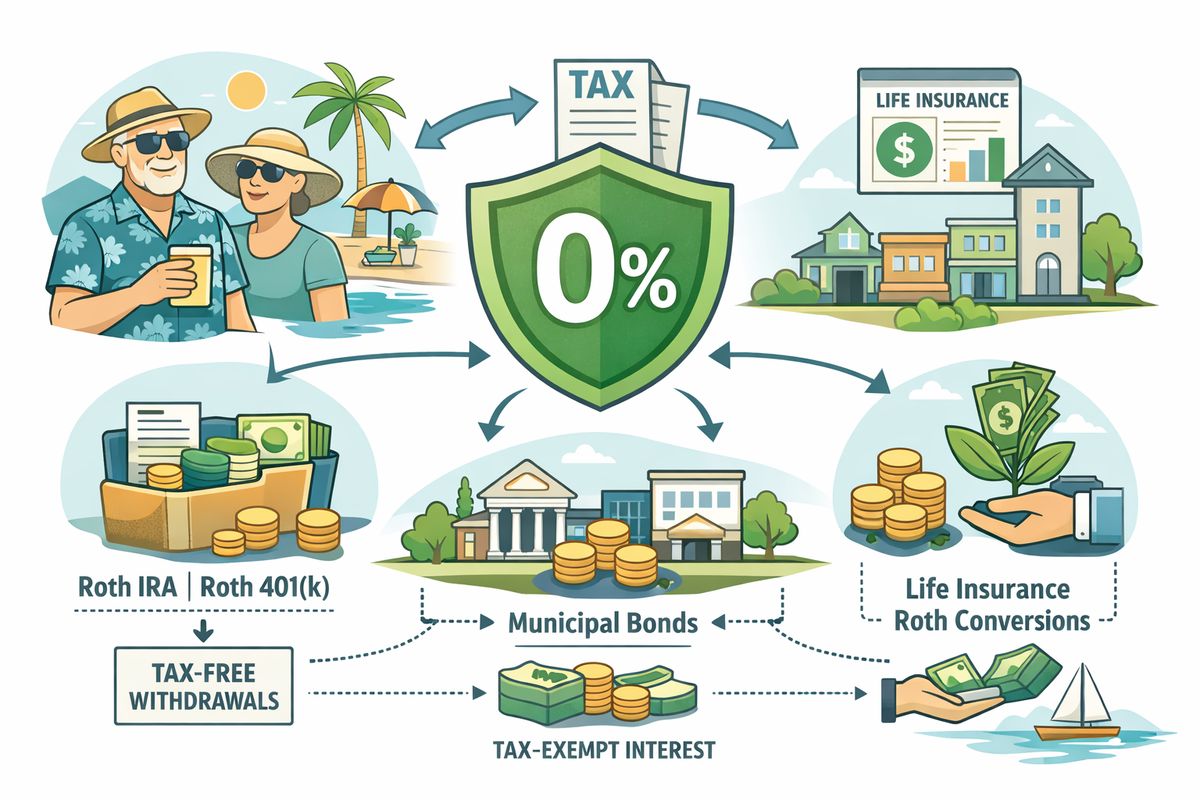
Tax-free retirement income strategies are ways to arrange your savings and withdrawals so less of your retirement paycheck gets eaten by taxes. That matters because plenty of people do everything “right,” save for decades, then get blindsided when money coming out of retirement accounts still counts as taxable income. The good news is that this is usually fixable, and it does not require fancy loopholes.
What tax-free retirement income strategies actually mean
Here’s the plain-English version: tax-free retirement income strategies are about deciding where to save, when to move money, and which accounts to tap so more of your money stays in your pocket.
The phrase “tax-free” can sound a little too shiny. In real life, it rarely means every dollar you touch in retirement is permanently untaxed. It usually means you reduce taxable income on purpose, year by year, instead of accidentally creating bigger tax bills than necessary. That is the real goal.
Think of it like packing for a trip. If everything gets tossed into one suitcase, finding what you need at the airport is a mess. If your money is spread across different tax buckets, and you know what each one does, retirement income gets much easier to manage.
How retirement income gets taxed
Most retirement income falls into three tax buckets: taxable, tax-deferred, and tax-free. Once you understand those buckets, the rest starts making sense fast.
A taxable account is money that gets taxed along the way, usually through interest, dividends, or gains when you sell investments. A tax-deferred account gives you a break now, but taxes usually show up later when you withdraw money. A tax-free account usually means you already paid taxes before the money went in, so qualified withdrawals later can come out tax-free.
The account type matters just as much as the investment itself. A stock fund inside a Roth works differently from the same stock fund inside a traditional IRA. Same investment, different tax result.
Taxable accounts: brokerage, bank interest, and capital gains
Taxable accounts include regular brokerage accounts, savings accounts, CDs, and other money that is not sitting inside a retirement wrapper. These accounts can produce taxable interest, dividends, and capital gains.
That said, taxable does not automatically mean bad. Long-term capital gains often get better tax treatment than ordinary income, and taxable accounts give you flexibility because there are no retirement account withdrawal rules attached. If you need cash for something specific, like a January property tax bill on a house in Phoenix, pulling from a brokerage account may be cleaner than triggering extra retirement-account income.
Tax-deferred accounts: traditional 401(k)s and IRAs
Traditional 401(k)s and traditional IRAs usually give you a tax break when you contribute. That upfront deduction feels great during working years, especially if your income is high.
The catch is that withdrawals in retirement are usually taxed as ordinary income. Not capital gains rates, not special rates, just regular income tax treatment. Later on, required minimum distributions, which are mandatory withdrawals starting at a certain age, can force money out whether you need it or not. That is why waiting too long to plan can backfire. If you want a quick side-by-side on another tax-deferred vehicle, this breakdown of delayed taxation inside permanent coverage helps show how tax timing changes the outcome.
Tax-free accounts: roth IRAs, roth 401(k)s, and similar sources
Roth IRAs and Roth 401(k)s are the accounts most people think of first when tax-free retirement income comes up. You fund them with money that has already been taxed, then qualified withdrawals in retirement are generally tax-free.
That is powerful, but it is only one part of a smart strategy. A Roth bucket works best when it sits alongside other buckets, not when you expect it to solve every tax problem by itself.
The tax-free retirement income strategies that make the most sense
The best strategy is usually a mix, not a single account. That is the opinion worth trusting here, because retirement taxes get messy when all your money is trapped in one kind of bucket.
Build a roth bucket before retirement
Having at least some money in a Roth IRA or Roth 401(k) gives you flexibility later. If one year looks tax-heavy, you can pull from the Roth side without stacking more taxable income on top.
That flexibility matters more than people expect. It can help you manage Medicare-related income thresholds, reduce how much other income shows up on your return, and simply make retirement feel less reactive. Even a modest Roth balance can act like a pressure-release valve.
Use roth conversions in lower-income years
A Roth conversion means moving money from a traditional IRA or 401(k) into a Roth account and paying taxes on that amount now. In exchange, future qualified withdrawals can be tax-free.
This often makes sense during lower-income years, such as early retirement before Social Security starts, a year after leaving a job, or any stretch when taxable income drops. The catch is obvious but important: you get the tax bill upfront. Done thoughtfully, that trade can be worth it. Done carelessly, it can push you into a higher bracket for no good reason.
Mix withdrawals instead of draining one account at a time
A lot of people assume the cleanest plan is to spend one account down, then move to the next. Simple? Yes. Best? Usually not.
If you drain only tax-deferred accounts first, or only taxable accounts first, you can create ugly tax bumps later. Mixing withdrawals from taxable, tax-deferred, and Roth accounts can smooth income over time. That steadier pattern is often the difference between manageable taxes and surprise taxes.
Be strategic about when you claim social security
Social Security is not automatically tax-free. Depending on how much other income you have, part of your benefit can become taxable.
That does not mean you should delay or claim early just for tax reasons. It means Social Security timing works best as part of the bigger income picture. If you are filling lower-income years with Roth conversions, for example, the timing of benefits matters. So does the amount of income already showing up from traditional accounts.
Use tax-free sources beyond roth accounts
Roth money gets most of the attention, but it is not the only possible source of tax-friendly retirement cash. Health Savings Account withdrawals for qualified medical expenses can be tax-free. Municipal bond interest can be federally tax-free in many cases. Cash value from already-taxed funds can also be relevant, though the rules vary and the details matter a lot. If that area is on your radar, this explanation of when policy value is and is not taxable clears up a lot of confusion.
How to choose the right withdrawal order for your situation
Withdrawal order sounds boring until it costs you money. The order you pull income from can either keep taxes under control or quietly raise them.
Picture that Phoenix property tax bill showing up in January. You could pay it from a taxable brokerage account, from a traditional IRA withdrawal, or from a Roth account. Same bill, different tax result. That is why withdrawal sequencing matters.
The traditional “one account at a time” approach
The classic approach is simple: spend taxable accounts first, then tax-deferred accounts, then Roth accounts last. It is easy to remember, and sometimes it works fine.
But here’s the problem. Spending taxable money first can leave a huge traditional IRA or 401(k) untouched for years. Later, required minimum distributions can push more money onto your tax return than you actually want. That is how a simple plan turns into a tax bump.
A proportional withdrawal approach
A proportional approach means taking planned amounts from different account types each year instead of emptying one bucket before touching another. That can keep taxable income steadier across retirement.
Steadier is the key word. Not perfect, not tax-free every year, just steadier. For a lot of households, that approach makes more sense because it gives you flexibility without the shock of larger forced withdrawals later. If you are comparing different tax treatments more broadly, this look at what counts as tax-smart growth and what does not gives useful context.
Common misunderstandings about tax-free retirement income
This topic gets confusing fast because people use “tax-free” like it means “no rules.” It does not.
“Roth means no rules”
Roth accounts still come with rules. There are contribution limits, income-related eligibility details, and withdrawal rules that determine whether earnings come out tax-free.
That does not make Roth accounts less useful. It just means the label is not magic. You still need to know what kind of Roth account you have and whether the withdrawal qualifies.
“Tax-free is always better than tax-deferred”
This idea sounds smart but falls apart quickly. During high-income working years, a traditional 401(k) or IRA can be the better move because the tax deduction today may be worth more than paying taxes now for a Roth contribution.
The trick is balance, not ideology. Tax-deferred money is not a mistake. Too much tax-deferred money without a plan is the mistake.
“You need to eliminate taxes entirely”
You do not need some secret loophole to win here. The point is not to erase taxes from your life forever.
The point is to avoid avoidable taxes and create a retirement paycheck that feels steadier, more predictable, and easier to live on. That is a much saner target. For another area where tax-free claims get misunderstood, this plain-English guide to what life insurance actually shelters is worth reading.
A simple way to start without overcomplicating it
If this topic feels like a lot, that reaction makes sense. Retirement tax planning has a way of sounding harder than it needs to be.
Start by listing every account you have on one page. Label each one taxable, tax-deferred, or tax-free. Then check whether your current workplace plan offers a Roth option, and notice whether any upcoming lower-income year could make a Roth conversion worth pricing out. That one-page exercise is simple, but it changes how you see your money. Try that first.
Frequently asked questions
What is the best tax-free retirement income strategy?
The best approach is usually a mix of tax buckets, not one perfect account. A combination of Roth savings, thoughtful withdrawals from traditional accounts, and flexible taxable assets tends to work better than putting everything in one place.
Are roth IRA withdrawals always tax-free?
Not always. Contributions can usually come out tax-free, but earnings need to meet qualified withdrawal rules, including account age and age-based requirements. The account type and timing matter.
Can social security be tax-free in retirement?
Yes, sometimes. If your other income stays low enough, some or all of your Social Security may avoid federal income tax. Once other income rises, more of the benefit can become taxable.
Should you convert all traditional IRA money to roth?
Usually not all at once. A full conversion can create a large tax bill in the year you convert. Smaller conversions during lower-income years often make more sense.
Is a taxable brokerage account bad for retirement income?
No. Taxable accounts can actually be very useful because they offer flexibility and may get favorable long-term capital gains treatment. The value is not just tax rate, it is control.
What is the biggest mistake with retirement withdrawals?
One of the biggest mistakes is pulling money from accounts in a rigid order without looking at the tax result. A simple withdrawal plan can accidentally create larger taxable income later, especially once required minimum distributions begin.
Insurance insights and tips




%20(3).png)