%20(2).png)
Telematics in Life Insurance: Turning Device Data To Insight
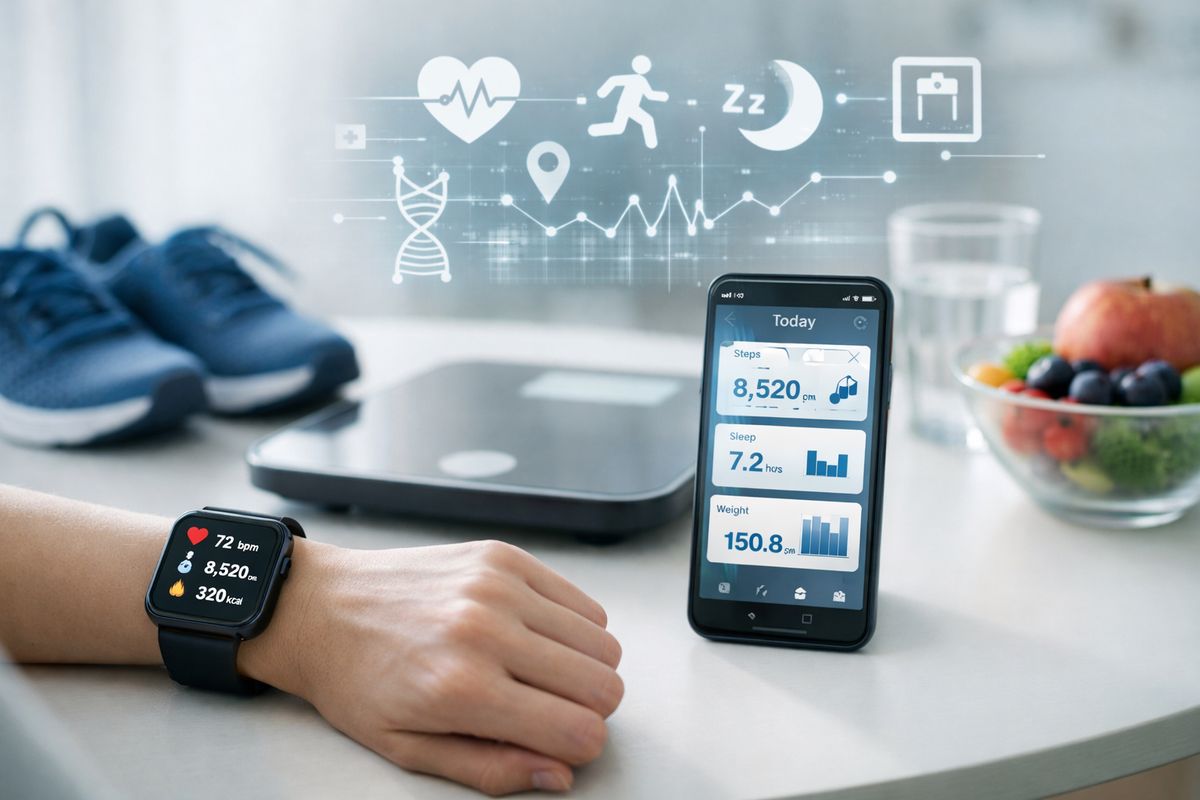
Telematics: Connected device data used for lifestyle-based health tracking. In life insurance, that simple idea changes a lot. If you have ever tried to understand a client from a paper application alone, you already know the problem: a form shows a snapshot, but a smartwatch checked during a Tuesday walk in Phoenix can show patterns that feel much closer to real life.
What telematics means in life insurance
In life insurance, telematics means connected device data that helps show day-to-day health and behavior patterns. Think wearables, phones, fitness apps, and other tools that collect information as a client goes through normal life, not just during an exam or application.
That matters because life insurance has usually been built around static moments. An application asks about history. Medical records describe past visits. A paramed exam captures one point in time. Telematics adds something different: ongoing signals about habits, movement, sleep, and routines.
Here’s the thing: this is not a futuristic lab concept anymore. It is already familiar to clients who count steps, close activity rings, log workouts, or weigh in on a smart scale before work. In life insurance, the same connected data can support underwriting, wellness engagement, and more personalized policy experiences.
How device data turns into underwriting insight
The basic flow is straightforward. A connected device collects data, that data gets cleaned up and organized, and the insurer turns it into usable signals. Those signals can then support underwriting insight, which simply means useful patterns that help price or evaluate risk.
Raw data by itself is messy. Ten thousand steps on one Saturday do not say much. But six months of activity consistency, sleep patterns, and heart rate trends can start to tell a clearer story. That is where telematics becomes useful, because insurers are rarely looking for one dramatic number. The goal is usually to spot patterns that are stable, improving, or concerning.
In practice, this often sits alongside broader systems that turn incoming information into action. If you want the bigger picture, it helps to understand how signals get translated into business decisions.
The kinds of devices involved
Most of the devices involved are tools a client may already own. Smartwatches are the obvious example, but smartphones matter too, especially when health apps track movement, workouts, or sleep. Fitness trackers, smart scales, connected blood pressure devices, and app-linked wellness platforms also show up.
The trick is to keep the conversation familiar. You are not talking about exotic medical hardware. You are usually talking about the same devices clients use at the gym, on morning walks, or while checking how many hours of sleep they got after a rough Monday night.
What data points usually matter
Common data points include steps, general activity levels, workout frequency, sleep duration, sleep consistency, resting heart rate, and heart rate trends over time. In some programs, other behavioral signals can matter too, especially if a platform is built around broader engagement patterns.
But raw numbers are not the main story. Consistency matters more than spikes. A client who walks 7,000 to 9,000 steps most days for months often tells a more useful story than a client who posts one huge weekend hike and then disappears from the device for three weeks.
Why telematics is getting attention in life insurance
Telematics is getting attention because it changes the conversation from what happened in the past to what is happening now. That is a real shift, not a marketing line.
From a business side, connected data can create more visibility between application and claim. From a client side, it can make insurance feel more personal and less like a one-time transaction. There is obvious appeal in rewarding healthy habits, supporting wellness, or making some underwriting paths smoother instead of relying only on a static application snapshot.
This also fits the broader shift toward faster, more digital insurance experiences. Telematics is one piece of a larger move toward connected insurance workflows, where information moves more easily and clients expect less friction.
What makes it different from traditional underwriting
Traditional underwriting leans on applications, medical exams, prescription checks, lab work, attending physician statements, and other records. Those sources still matter. Telematics does not erase them.
What telematics adds is context over time. A form can ask whether a client exercises. A wearable can show how often movement actually happens. A medical record can confirm a diagnosis. A device can show whether daily routines look stable or erratic. That is useful, but it is still only one layer of the picture.
The catch is that telematics should be seen as additive, not magical. In many cases, it supplements traditional underwriting rather than replacing it.
Where it fits in the customer experience
This is where life insurance starts to feel less like a file cabinet product. Telematics can support wellness programs, rewards, app-based engagement, and retention efforts after issue. Instead of disappearing into paperwork, a policy can stay present through check-ins, points, reminders, or behavior-based incentives.
That matters in ordinary client conversations. If a client is comparing a basic temporary coverage option with a more feature-rich offering, telematics may be part of the experience difference, not just the pricing conversation.
The main use cases you’re most likely to run into
The most common use cases are not hard to explain. In life insurance, telematics usually shows up in pricing and rewards programs, wellness engagement, or underwriting support.
Some carriers build programs around healthy behavior incentives. Others use connected data to support faster decisioning in certain cases. Some use it mainly to keep policyholders engaged after issue. Same core idea, different practical use.
Lifestyle-based pricing and rewards
A lifestyle-based program may use activity or wellness data to support discounts, points, rewards, or better pricing opportunities. The exact structure depends on the carrier, but the value exchange is simple: share certain health-related device data, then get recognized for habits that fit the program.
This is one of the easiest ways to explain telematics to clients. Instead of talking about data architecture, talk about outcomes. If a client already uses a wearable every day, getting rewarded for behavior that already exists feels much more concrete.
Ongoing wellness engagement
Ongoing engagement is a big reason telematics keeps showing up. A connected app can nudge a client to stay active, track progress, prompt habit goals, or check in on sleep and fitness routines.
That may sound small, but it changes the feel of the product. Life insurance has long suffered from a silence problem: application, issue, drawer. Telematics helps break that pattern by giving clients a reason to interact after the policy is in force.
Faster or more flexible underwriting support
In some settings, connected data may support accelerated or more flexible underwriting. It can supplement an application, help reduce friction, or support a decision path that avoids some of the old paperwork burden.
Not every carrier handles this the same way, which is why details matter. If you want a clearer picture of how fast-decision models work, it helps to see how instant review systems handle health and financial inputs. In some environments, telematics may also feed into touchless issue paths that cut manual handling.
What telematics can and can’t tell you
Telematics can reveal patterns. It cannot deliver a complete medical truth.
That distinction matters because connected device data feels objective, but it is still partial. A watch can show movement, sleep estimates, and heart rate trends. It cannot fully explain illness, motivation, stress, injury, context, or what happened on days the device sat on a nightstand.
Strengths: pattern recognition over time
The strength of telematics is trend recognition. Over weeks and months, it can show consistency, change, drop-off, improvement, or routine. That is useful because risk often lives in patterns, not isolated moments.
A simple analogy helps: one bank receipt says almost nothing about spending habits, but six months of statements can reveal a lot. Connected health data works in a similar way. One sleep score is noise. A long run of poor sleep, low activity, and rising resting heart rate starts to look like a meaningful pattern.
Limits: incomplete, inconsistent, and context-dependent data
Device accuracy varies. Wear time varies. User behavior varies. A client may forget to charge a tracker, switch devices, stop logging workouts, or wear a watch only on good days. All of that affects the quality of the signal.
Context matters too. A drop in activity could reflect travel, a sprained ankle, a new baby, or a demanding work stretch, not a durable health decline. That is why more data is not automatically better. The useful part is interpretation, often paired with tools like risk models that improve as more patterns are analyzed.
Privacy, consent, and compliance: the part you can’t skip
This part is not optional. If telematics depends on connected personal data, then trust becomes part of the product.
Clients want to know what is being collected, how it is used, who sees it, how long it is stored, and what happens if participation stops. If those answers are vague, the whole conversation gets shaky fast. Clear disclosure is not just a compliance issue, it is how you keep the idea from sounding creepy.
What informed consent should look like
Informed consent should be plain English, not a maze. A client should be told what device data is collected, how often data is shared, how it affects underwriting or rewards, who can access it, and whether participation is optional.
The same goes for duration. If tracking is ongoing, say so. If the data is used only for a wellness program and not initial pricing, say that too. A client should never have to guess where the line is.
Questions clients are likely to ask
Most client questions are predictable. Is this surveillance? Will a bad month hurt pricing? What if the device gets it wrong? Can the carrier keep tracking forever? Is the data secure?
The best answers stay simple. Participation should be framed around permission and clearly defined use. Imperfect habits should not be presented like a trap. Data security should be addressed directly, including who gets access and how information moves through connected systems, often through real-time links between outside data and carrier platforms.
Common misconceptions about telematics in life insurance
A few misunderstandings come up again and again, and fixing them quickly makes every client conversation easier.
“Telematics is just for auto insurance”
A lot of people first heard the word in auto insurance, where driving behavior is tracked through apps or in-car devices. In life insurance, the same basic idea applies to health and lifestyle patterns instead of braking, speed, or mileage.
So yes, the term has auto roots in many people’s minds. But in life insurance, telematics points to connected behavior and health data used to create insight.
“More data always means better underwriting”
No. More data can just mean more noise.
Useful, relevant, consented data matters far more than a giant pile of disconnected numbers. If the signal is messy, inconsistent, or poorly explained, it can complicate decisions instead of improving them.
“A wearable score replaces medical underwriting”
This is another common miss. A wearable score or behavior-based data stream can support underwriting, engagement, or pricing models, but it usually works alongside other inputs.
Medical records, application details, prescription history, and financial information still matter in many cases. Telematics is a layer of context, not a total substitute.
How to talk about telematics with clients without losing them
If you lead with sensors, data feeds, and technical jargon, you lose the room. Fast.
The better move is to start with the client benefit, define the term in one sentence, and explain the tradeoff clearly. Keep it grounded in what changes for the client, not what changes in your back-end workflow.
Start with the client benefit, not the technology
Start with convenience, personalization, rewards, or a fuller picture of everyday health habits. That is what clients care about.
You are not selling a device. You are explaining a policy experience that can feel smoother, more tailored, and more interactive than old-school life insurance. That framing works especially well when a client is already trying to sort through how to choose the right kind of coverage.
Use a simple explanation for the value exchange
The simplest explanation is usually the best one: a client shares certain fitness or wellness data from a device, and in return may get a smoother process, more personalized engagement, or program-based rewards.
That is the value exchange. Clear, direct, and easy to remember. If you make that trade obvious, telematics stops sounding abstract.
Know the one question to ask next
A good next step is one plain question: would you be open to a policy experience that uses fitness tracker data if it made things simpler or more personalized?
Try that phrasing. It keeps the focus where it belongs, on value, choice, and comfort with the trade. Once you understand telematics this way, it stops being a buzzword and starts becoming a practical tool you can explain in under a minute.
Insurance insights and tips




%20(3).png)